
Nikro Air Duct Cleaning in Hawthorne: A Homeowner’s Guide
Nikro air duct cleaning means the contractor is using negative-pressure extraction equipment built for remediation work, not a modified shop vac. In Hawthorne, where most homes run forced-air systems hard through long stretches of warm weather, that distinction matters more than the brand sticker on the van. Here’s what the equipment actually does, what the name doesn’t guarantee, and which questions separate a real cleaning from a filter change with extra steps. If you’d rather skip the research and get a straight answer about your system, call (855) 473-3133.
What Nikro Equipment Actually Does Inside Your Ducts
Nikro Industries builds vacuum and agitation systems for the restoration and environmental-remediation trades. Their machines turn up on mold jobs, post-fire cleanups, and industrial dust-control projects. When a contractor brings that same class of gear into a Hawthorne home, the mechanical goal is simple: create continuous negative pressure inside the ductwork so that anything knocked loose gets pulled out of the system instead of drifting back into bedrooms and living rooms.
The core piece is a HEPA-filtered negative-air unit. Connected to the main supply or return trunk, it pulls the entire duct run into a state of low pressure. Air moves toward the vacuum, carrying dislodged particulates with it. A portable Nikro unit does this from a hallway or garage, not from a truck parked at the curb. That portability matters in Hawthorne’s older two-story homes, where duct runs stretch across attics and through chases that a long truck-mount hose can’t always reach effectively. Shorter hose runs mean less static-pressure loss, and in duct cleaning, pressure is what moves debris.
The HEPA filter is the other half of the equation. A properly maintained HEPA stage traps fine particulates before exhaust air returns to the living space. That’s the standard industrial hygienists expect on sensitive jobs. Without it, you’re blowing a portion of what you just cleaned back into the house. We run our extraction systems with that in mind from the first minute of a job, because the process only works if the air leaving the machine is cleaner than the air entering it.
What the Nikro Name Does Not Guarantee
Professional equipment is a starting point, not a result. We say this because we’ve seen what happens when a homeowner assumes a brand name equals a finished job. A Nikro vacuum in the hands of someone who doesn’t understand containment sequencing will leave the same debris behind a cheaper machine would, just with a better badge.
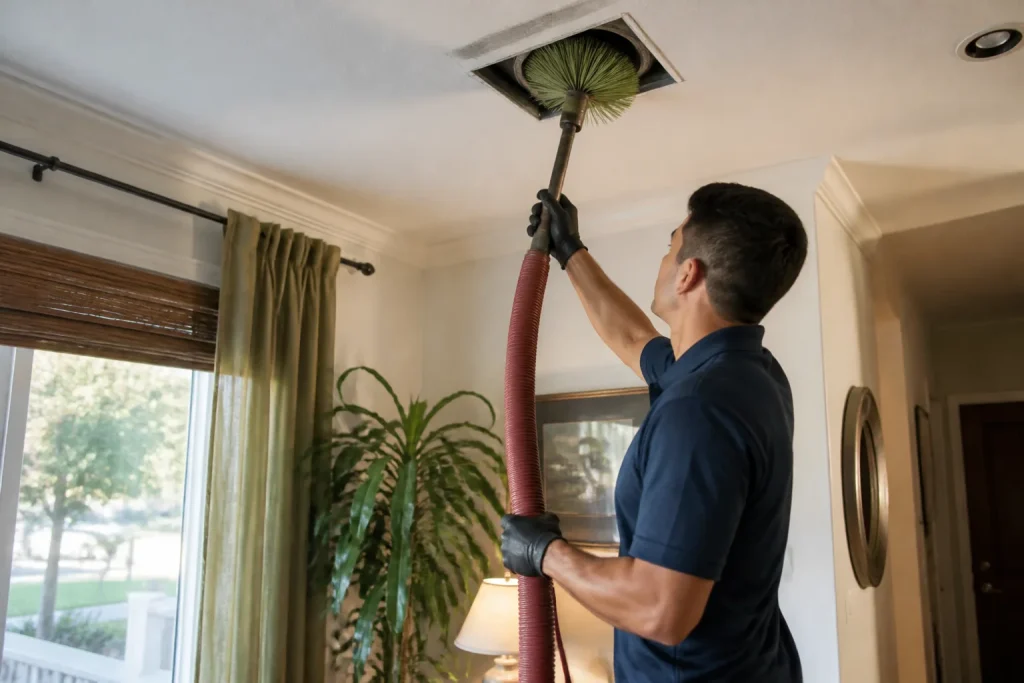
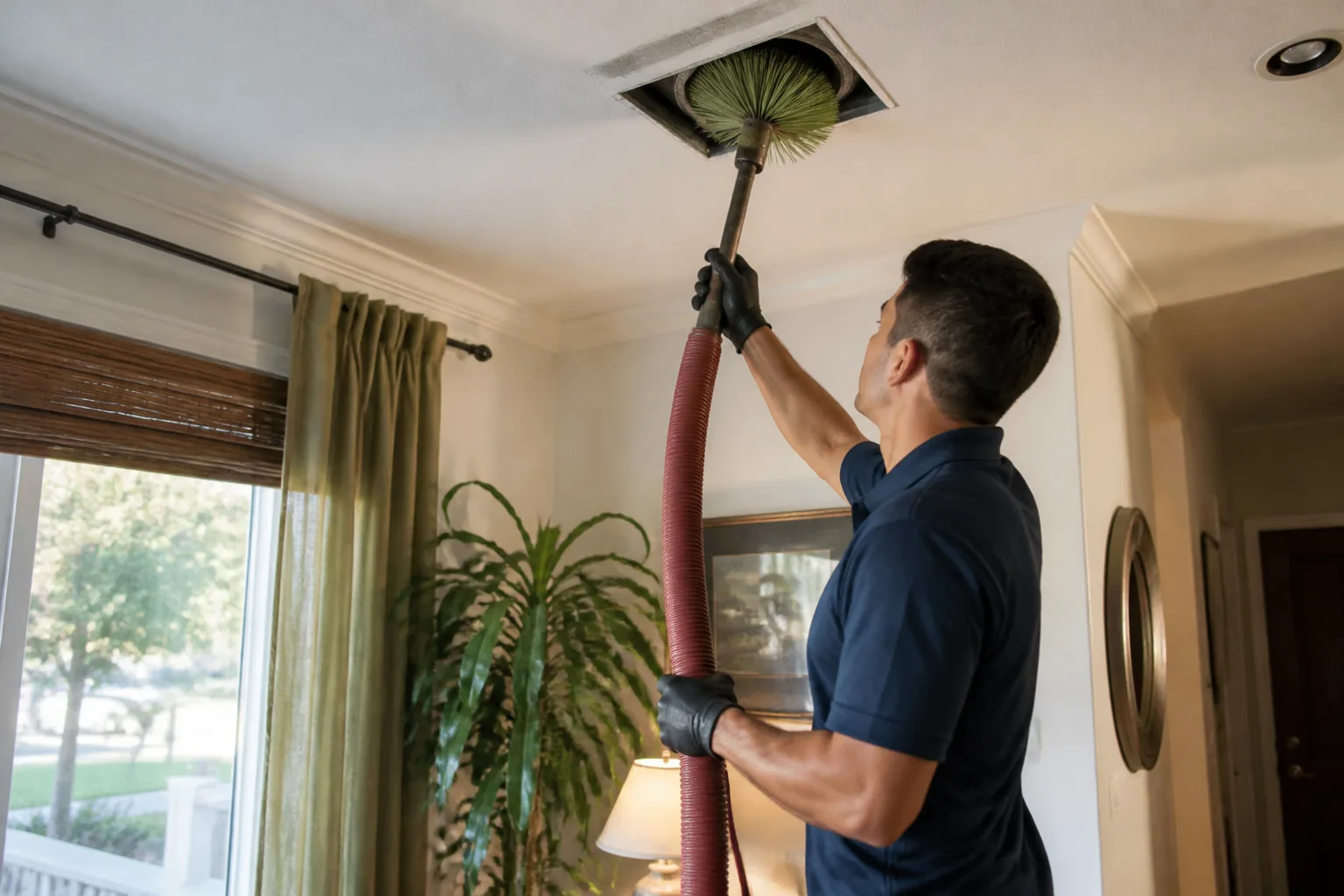
The real work in any air duct cleaning is the agitation sequence. Debris in Hawthorne ductwork doesn’t sit loose on flat metal surfaces. It coats them, packed into corners of elbows, caked onto turning vanes, trapped where flex duct meets rigid boots. A vacuum alone cannot remove that. You need agitation tools – rotary brushes, air whips, skipper balls – to break the bond between debris and surface. Then the negative pressure pulls it out.
Sequencing matters. The correct approach is agitate first, then vacuum, section by section through the system. Running the vacuum while agitating simultaneously reduces pressure in the main trunk, because an open access point is pulling outside air into the system rather than dislodged debris out of it. This is the kind of operational detail that separates a surface-level cleaning from a system-wide one. When you call a company, ask whether they run continuous negative pressure or section-by-section. The answer tells you more than any equipment sticker.
Related services in Hawthorne: if you’re having ducts cleaned because of airflow problems, ask about dryer vent cleaning as well. A clogged dryer vent often shares symptoms with dirty ductwork but needs its own fix.
Portable Units vs. Truck-Mounts: What Suits Hawthorne Homes
Truck-mount duct vacuums pull enormous airflow – often 8,000 to 12,000 CFM. They work well for single-story ranches where the truck can park close to the main trunk access. In Hawthorne, where many homes are two stories and duct chases run tight, a portable Nikro-style unit often does a better job because the hose doesn’t have to fight its own length.
Here’s the trade-off in plain terms:
- Truck-mount: High CFM, but hose runs can lose 30 – 40% efficiency over 100 feet. Best for short, accessible runs.
- Portable negative-air: Lower CFM on paper, but the unit sits inside the conditioned space near the access point. Less hose, less pressure loss, better containment control.
- Multi-story Hawthorne homes: Long runs from upper-floor registers to a street-level truck mean portable units often outperform in real conditions.
- Noise and access: Portable units avoid running a massive diesel engine on the street for two hours. Neighbors appreciate that.
The number to ask about is CFM, not brand. A contractor should be able to tell you what their vacuum pulls at the connection point, not just at the machine. If they can’t answer, they don’t understand their own equipment well enough to run your job.
Questions to Ask Any Duct Cleaning Company in Hawthorne
We get calls from homeowners who already had their ducts “cleaned” six months ago and want to know why dust is still coating the registers. Usually, the answer is that the previous company didn’t move enough air through the system to remove what they knocked loose. Here’s what to ask before you book anyone in Hawthorne:
- What CFM does your vacuum pull at the trunk connection? A real answer is a number, measured at the access point. A vague “it’s a professional machine” is a red flag.
- Is the HEPA filter current, and can I see the certification label? HEPA filters have service lives. If it hasn’t been changed recently, it isn’t filtering at spec.
- Are you running continuous negative pressure through the whole job? Section-by-section cleaning without sealing the rest of the system means debris moves from one part of the house to another.
- What agitation tools do you use, and in what order? The answer should mention agitate-then-vacuum sequencing, not “we run a brush in there while the vacuum runs.”
- Can I see before-and-after footage from inside the main trunk? Register photos only show the first foot of the run. The trunk line is where the small stuff accumulates.
These questions feel technical, and that’s the point. A company running professional-grade equipment should be able to answer all five without pausing. The ones who can’t are usually the ones who priced the job low enough to skip half the work.
What a Real Post-Job Verification Looks Like
After a proper cleaning, you should have more than a receipt. You should have visual proof from inside the system. The standard we hold ourselves to in Hawthorne is camera footage from the main trunk lines, before and after, pulled from the same access points both times.
Register photos are nearly worthless for verification. A camera pushed three feet into a supply vent sees the top inch of the duct wall. The real accumulation – fine dust, pet hair, pollen, the gray film that coats everything – sits in the trunk line and the returns, where air moves slower and everything drops out of suspension. That’s where the footage needs to come from.
Ask whether the company images the returns, the supply plenum, and the trunk after cleaning. If they only show you register shots, they didn’t verify the parts of the system that actually needed cleaning. Verification isn’t about making you feel good. It’s about proving air actually moves through a cleaner system after the job than before.
Nikro’s Place in a Fuller Indoor Air Picture
Cleaning ducts removes what’s already inside. It does not, by itself, change what enters the system tomorrow. In Hawthorne, where windows stay open much of the year and HVAC systems pull in whatever is in the air outside, filtration and humidity control are the second act of any real air quality plan.
That’s why we stock and install components from Honeywell and Aprilaire alongside our cleaning work. A better media filter catches more of what moves through the system after we leave. Humidity control matters here the way it matters anywhere forced air runs constantly: too much moisture and you’re feeding the exact biological growth you just removed; too little and static electricity holds dust to surfaces inside the ductwork.
For contamination-sensitive jobs, we’re set up with Abatement Technologies equipment, the same class of gear used on mold and allergen remediation projects. Those jobs are a step beyond routine maintenance cleaning, and they need a step beyond routine equipment. The point is continuity: the company that cleans your ducts should also understand what happens to them a week after the cleaning. If they don’t, you’ll be calling them again sooner than you should.
That continuity is why we run a focused three-service operation – Duct Cleaning Hawthorne handles air duct cleaning, dryer vent clearing, and structural duct repair from one dispatch. You don’t juggle companies when a cleaning turns up a disconnected branch line or a crushed return flex. We find the problem, we fix it, and we verify the fix in the same visit.
When to Call a Pro
Duct cleaning isn’t a DIY project, and it isn’t a handyman add-on. The equipment alone – a proper negative-air machine, not a rented carpet cleaner with a long hose – puts the job outside most homeowners’ reach. Then there’s the access problem: cutting clean, sealable entry points into a metal trunk line takes experience and the right tools. A bad access cut is a permanent leak.
You know it’s time to call when dust returns to furniture within days of cleaning, when airflow at registers is noticeably uneven, or when you move into a Hawthorne home with no record of the ducts ever being cleaned. New construction and renovation both leave drywall dust and debris in the system. That layer sits there until someone actively removes it. A filter change doesn’t touch what’s upstream of the filter.
If you’ve read this far and your system hasn’t been cleaned in years, or you’ve been living with the subtle stale-air smell that never quite goes away, the next step is a conversation. We answer 24/7. Fast dispatch from 7am to 7pm, Sunday through Friday.
The Bottom Line
Nikro equipment matters because it’s built to a professional standard – HEPA filtration, real negative pressure, the kind of containment that keeps dislodged debris from re-entering your home. But the brand on the machine doesn’t clean the ducts. The person running the sequence does. Ask about CFM, ask about agitation order, ask to see trunk-line footage. A company that can answer those questions confidently is the one to trust with your Hawthorne home.
If you’re in Hawthorne and want an honest assessment of your system, we offer free estimates. Call (855) 473-3133. We answer 24/7. Fast dispatch from 7am to 7pm, Sunday through Friday.
Frequently Asked Questions
Nikro builds vacuum and agitation equipment used in commercial remediation and restoration work, so yes, it’s a legitimate professional brand. What matters more is whether the technician running it understands negative-pressure containment and correct agitation sequencing. Ask about CFM and HEPA certification before you book.
Pricing depends on system size, the number of stories, and how much access the ductwork allows. There is no flat rate for every Hawthorne home, and any company quoting one without seeing your system isn’t giving you a real number. Estimates should be free and based on a written assessment of your specific layout.
Truck-mount systems pull very high airflow but lose efficiency over long hose runs. Portable negative-air units sit closer to the access point, which often makes them more effective in multi-story homes and tight duct chases. Both work; the right choice depends on the house, not the marketing.
Ask for before-and-after camera footage from the main trunk lines, not just register shots. The trunk is where fine particulate accumulates, and that’s where verification needs to happen. A company that can’t show you trunk-line footage didn’t verify the part of the system that mattered most.
Removing accumulated dust, pollen, pet hair, and construction debris from the system does reduce the particulate load moving through your home. It’s most effective when paired with proper filtration after the cleaning, so the system stays cleaner longer. Cleaning alone won’t fix an unfiltered return pulling in new debris.
Written by the team at Duct Cleaning Hawthorne, serving Hawthorne since 2014.
Need Air Duct Cleaning Help?
Call Duct Cleaning Hawthorne - licensed & insured, here with fast help in Hawthorne.
(855) 473-3133